
Six Nations
The Haudenosaunee Confederacy is made up of six distinct nations, each with their own territory, traditions, and responsibilities within the Confederacy. Click each nation to learn more about who they are and where they come from.
Illustrations by Bill Powless
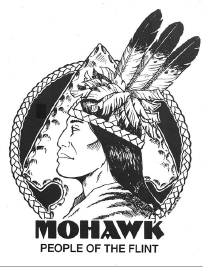
Kanien’kehakaPeople of the Land of Flint
Click the image to learn about this nation
Mohawk NationKnown as the Keepers of the Eastern Door, the easternmost nation lived in the Mohawk Valley, usually with three main clan villages – Turtle, Wolf and Bear, as well as some satellite communities. Within their territory were great deposits of flint (actually chert) used to make projectile points and sharp cutting tools. They were the first to taste the sting of colonization, as well as benefit from the fur trade. Colonization caused the breakup of the Kanien’kehaka, sending their people to several different communities: two in Quebec, three in Ontario, one in New York State.
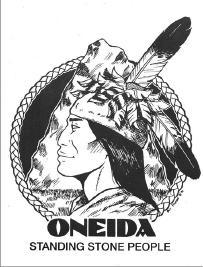
OnLyota’a:kaPeople of the Standing Stone
Click the image to learn about this nation
Oneida NationLiving in three main clan villages – Turtle, Wolf and Bear – around the Oneida Lake region, the People of the Standing Stone got their name from a whitish stone that always appeared near one of their villages. It would either be standing up or placed within a tree nearby. As a Younger Brother they were expected to take in those seeking to find peace in their lives. Colonization caused the break-up of the OnLyota’a:ka and resulted in three separate communities – 32 Acres near Oneida Lake; Oneida of the Thames, Ontario, Canada; and Oneida Nation of Wisconsin, Green Bay, WI.
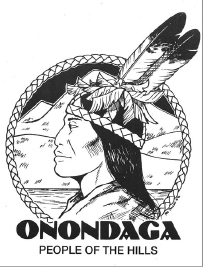
Ononda’gega’People of the Hills
Click the image to learn about this nation
Onondaga NationAt the Capitol of the Confederacy, the Onondaga villages were spread out along the Onondaga Lake and Onondaga Creek corridor. Having thirteen clan villages, they covered a lot of territory. They are known as Keepers of the Central Fire as most Grand Councils were hosted in their territory. They are also known as the Wampum Keepers, holding in trust the sacred wampum belts of Haudenosaunee governance, history and cultural knowledge. Colonization caused the breakup of the Ononda’gega’, with some remaining at the Capitol in New York and others relocating to the Grand River Territory in Ontario, Canada.
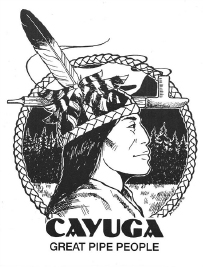
Gayogohó:noPeople of the Swamp
Click the image to learn about this nation
Cayuga NationAnother Younger Brother, the People of the Swamp lived in ten clan villages from the Montezuma Swamp to Lake Cayuga. Ganogeh was their principal settlement. Many Cayuga villages were destroyed by the American army in 1779. After 1795, their people moved to the Grand River Territory in Canada, or the Ohio Valley where they merged with the Seneca to become the Seneca-Cayuga Tribe of Oklahoma.
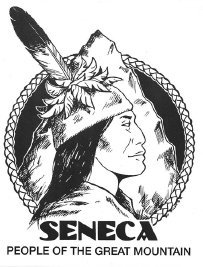
Onodowa’ga:’People of the Great Hill
Click the image to learn about this nation
Seneca NationThe westernmost of the original Five Nations of the Haudenosaunee Confederacy, known as Keepers of the Western Door. They occupied four main villages on either side of the Genesee River, with a number of satellite settlements, and have eight family clans. Colonization caused the breakup of the Onodowa’ga:’, now living in five different communities: Tonawanda, Cattaraugus, Allegany, Oil Spring and Six Nations of the Grand River Territory. The traditional government that operates under the Kaianere’kó:wa is headquartered at the Tonawanda Seneca Nation.
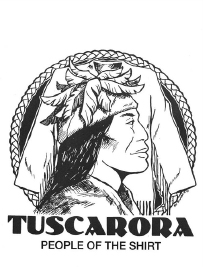
Ska ru·re?People Who Split the Hemp
Click the image to learn about this nation
Tuscarora NationOriginally from Western New York, the Ska ru·re? migrated to North Carolina in ancient times and lived there until wars with the British forced them north to join the Haudenosaunee Confederacy by 1720. One of the Younger Brothers, their villages were destroyed by the Americans in 1779, and they eventually acquired lands on the Niagara Escarpment near Lewiston, NY. Others went to the Grand River Territory in Canada. There are people in North Carolina claiming to be Tuscarora, however they are not recognized as Ska ru·re? citizens by the Nation.